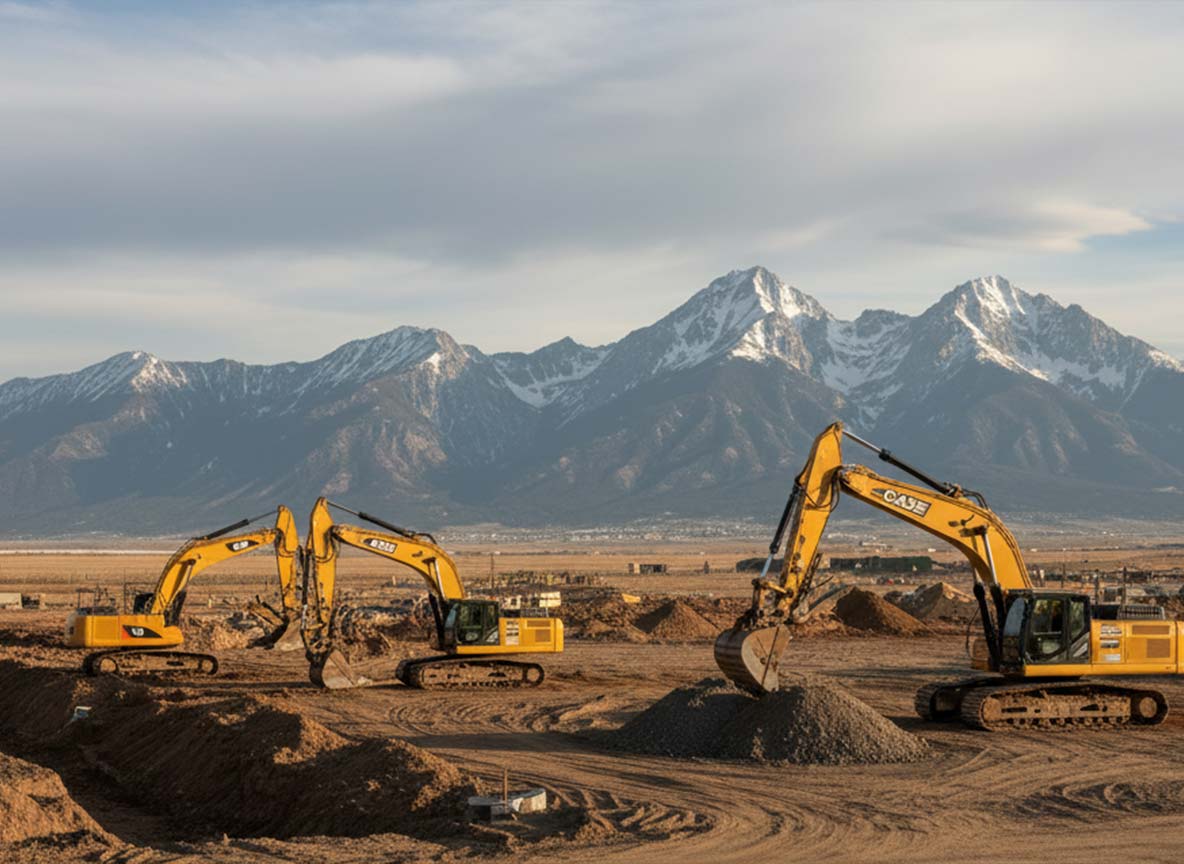
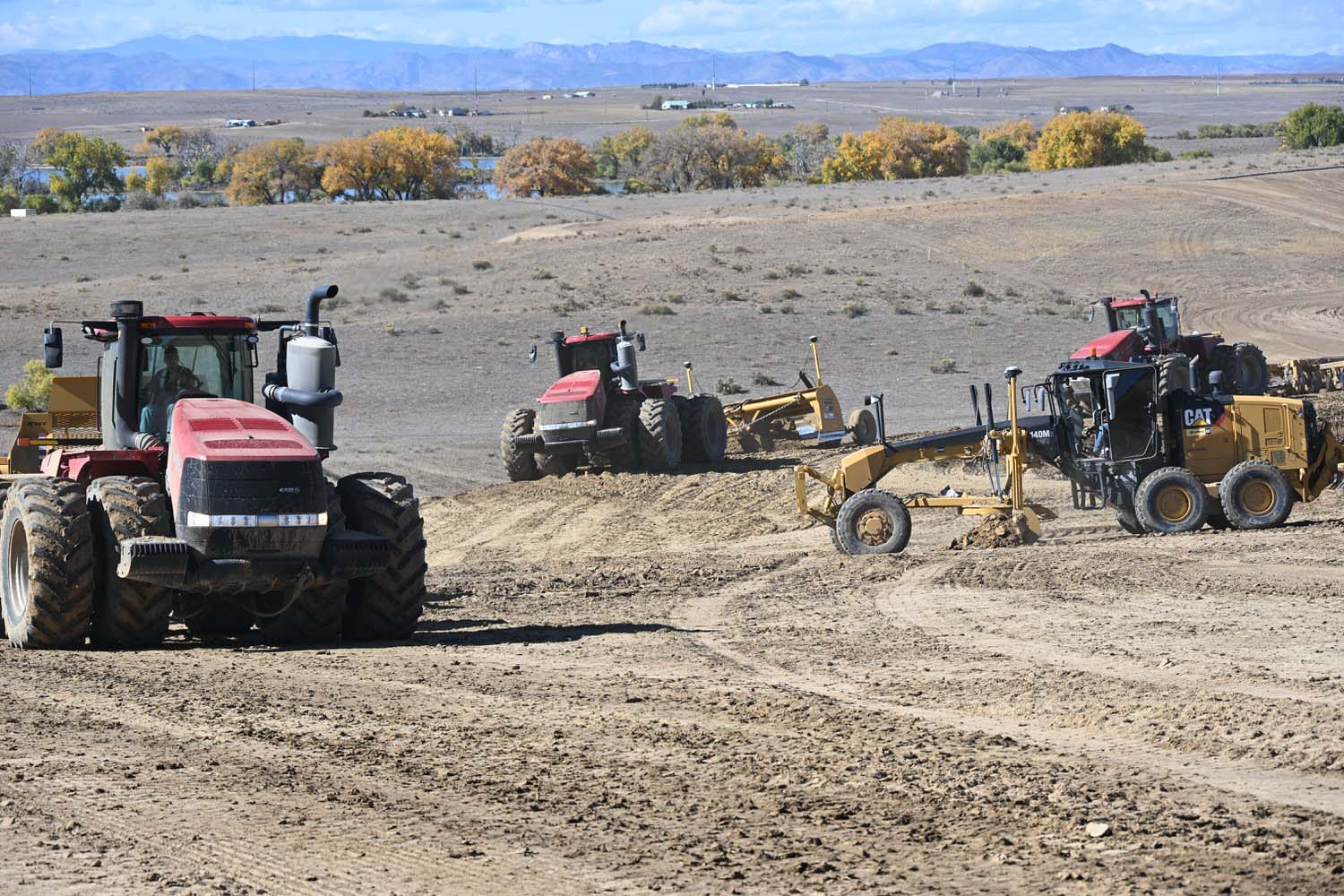
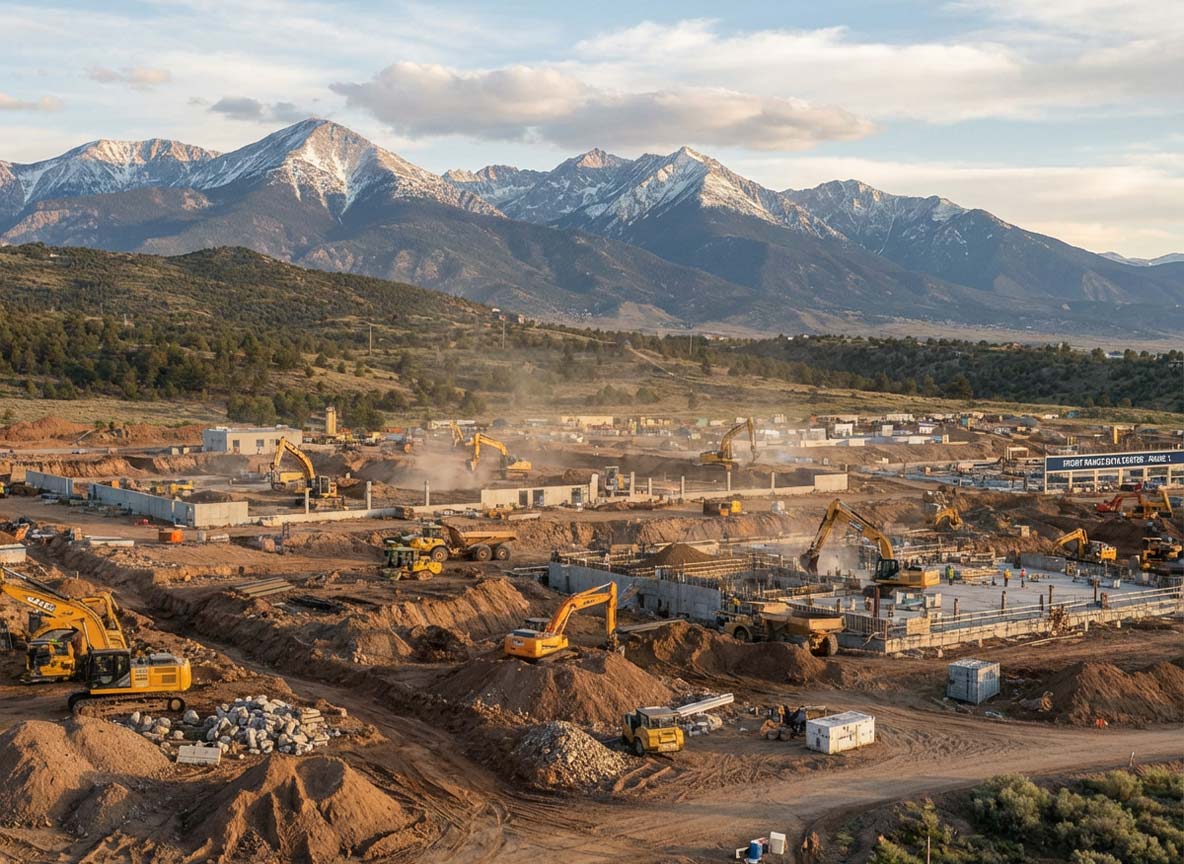
Mass grading and over-excavation are where reliable uptime truly begins.
Why Building Pads Matter So Much for Data Centers
Unlike typical office or retail sites, data centers concentrate extremely heavy loads—racks, electrical gear, cooling systems, and backup power—into compact footprints. Differential settlement, poor drainage, or soft spots beneath slabs can lead to:
- Slab cracking and floor unevenness
- Misalignment of critical equipment
- Long-term structural and maintenance issues
- Costly remediation on a live facility
That’s why developers and engineers are increasingly focused on getting the pad right the first time.
The Role of Mass Grading
Mass grading sets the stage for the entire site:
- Establishes primary drainage patterns
- Shapes access roads, parking, and laydown areas
- Creates building pad elevations that work with stormwater systems and utility corridors
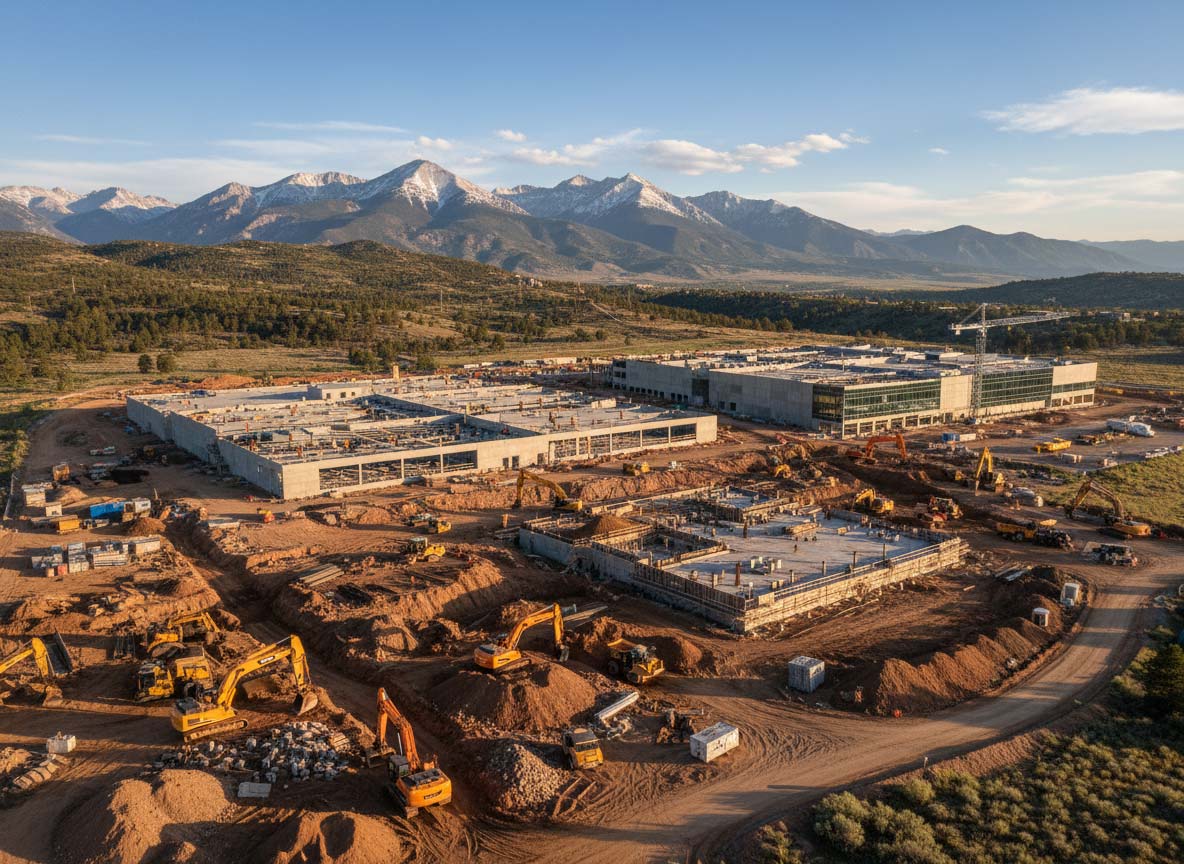
For large or multi-building campuses, grading must accommodate:
- Current buildings
- Future expansion pads
- Retention/detention basins
- Generator and substation yards
A good excavation partner doesn’t just “hit elevations”—they help the team think several phases ahead.
Over-Excavation and Soil Correction
On many data center sites—particularly in Colorado’s variable soil conditions—simply grading and compacting the top layer is not enough. Over-excavation involves:
- Removing unsuitable or unstable soils to a specified depth
- Replacing them with engineered fill or better-performing material
- Compacting in controlled lifts to meet geotechnical requirements
This reduces the risk of settlement and provides a uniform, predictable base for foundations and slabs.
Working Hand-in-Hand With Geotechnical Engineers
Data center pads require close collaboration between the excavation contractor and the geotechnical team:
- Interpreting borings and recommendations
- Identifying areas of concern once excavation starts
- Adjusting over-excavation limits based on field conditions
- Coordinating compaction testing and documentation
An experienced contractor will treat the geotech report as a roadmap—not an afterthought—and maintain open communication throughout earthwork.
Grading for Drainage and Snowmelt
Colorado’s freeze–thaw cycles, snow events, and spring runoff put added pressure on site grading:
- Pads must be set to shed water away from the building and critical paths
- Yard areas around generators, transformers, and mechanical equipment need reliable drainage
- Slopes must be stable and maintainable over time
The grading plan should consider how the site behaves not just on a sunny day, but during storms and snowmelt.
Building a Pad for the Future
As AI and high-density workloads increase power and cooling demands, many data centers are designed with expansion in mind. That means:
- Grading for future building pads early
- Installing utilities and drainage systems sized for multiple phases
- Planning access and laydown that won’t be disrupted by later construction
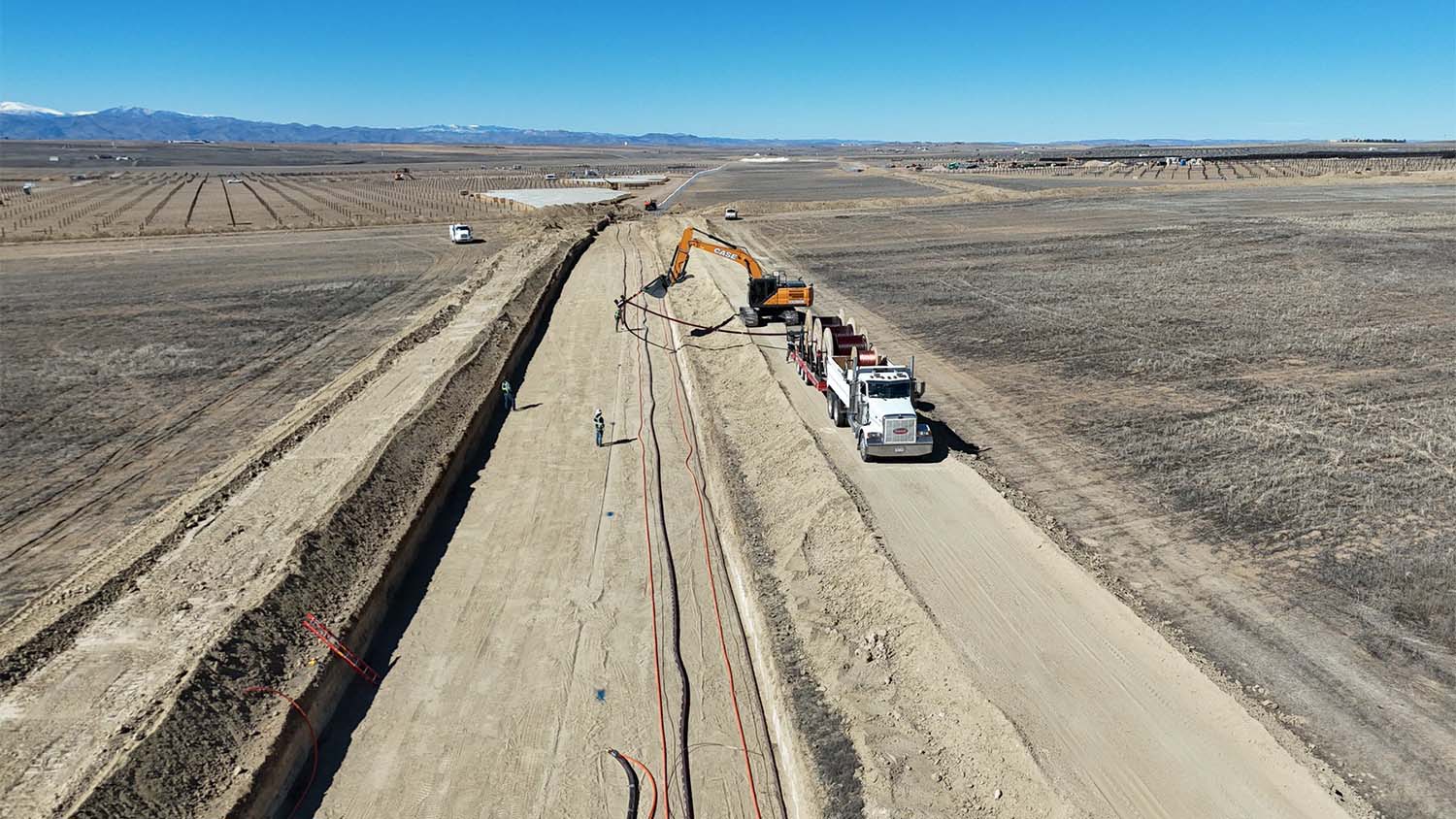
Black Mountain Excavation’s experience on large solar and infrastructure projects has built a deep understanding of how to shape the ground once and support decades of use. For hyperscale and AI-ready data centers, the right pad isn’t a line item—it’s the foundation of uptime.