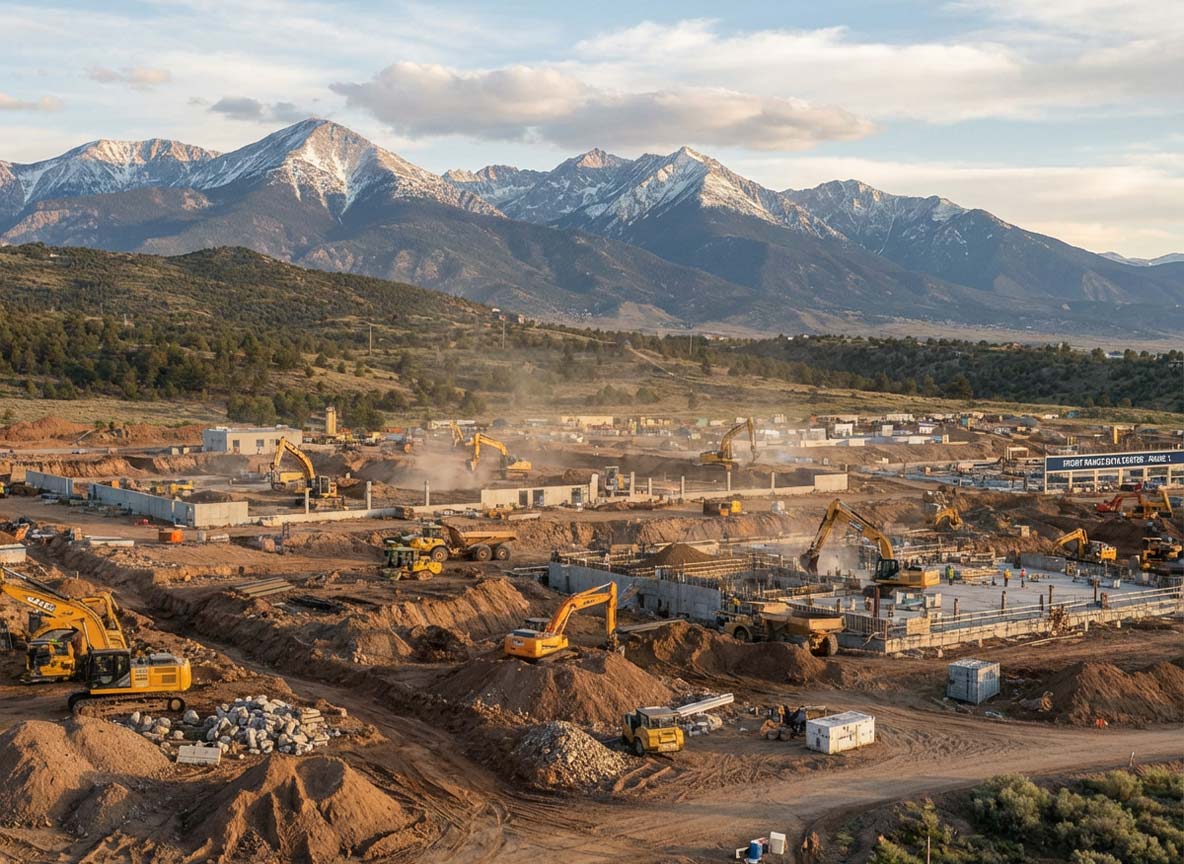
Why Underground Matters So Much
High-density data centers rely on massive amounts of:
- Electrical power (often with multiple feeds and substations)
- Fiber and network connectivity
- Cooling water or refrigerant lines (depending on the design)
- Stormwater, sanitary, and other site utilities
All of this infrastructure needs to be:
- Protected
- Accessible
- Clearly organized
- Built for redundancy and future expansion
Those goals start with smart planning of utility corridors and precise excavation.
Planning Utility Corridors Early
The most efficient sites treat utility layout as a core part of early civil design, not a late overlay. Key considerations include:
- Primary power duct bank routes from the substation or utility connection
- Redundant and diverse fiber paths entering the building
- Separation between electrical, communications, and water utilities
- Clear, safe routes for maintenance and future upgrades
An experienced excavation contractor can provide practical input on:
- Trench depth and width
- Bend locations and constructability
- Required clearances to avoid conflicts in the field
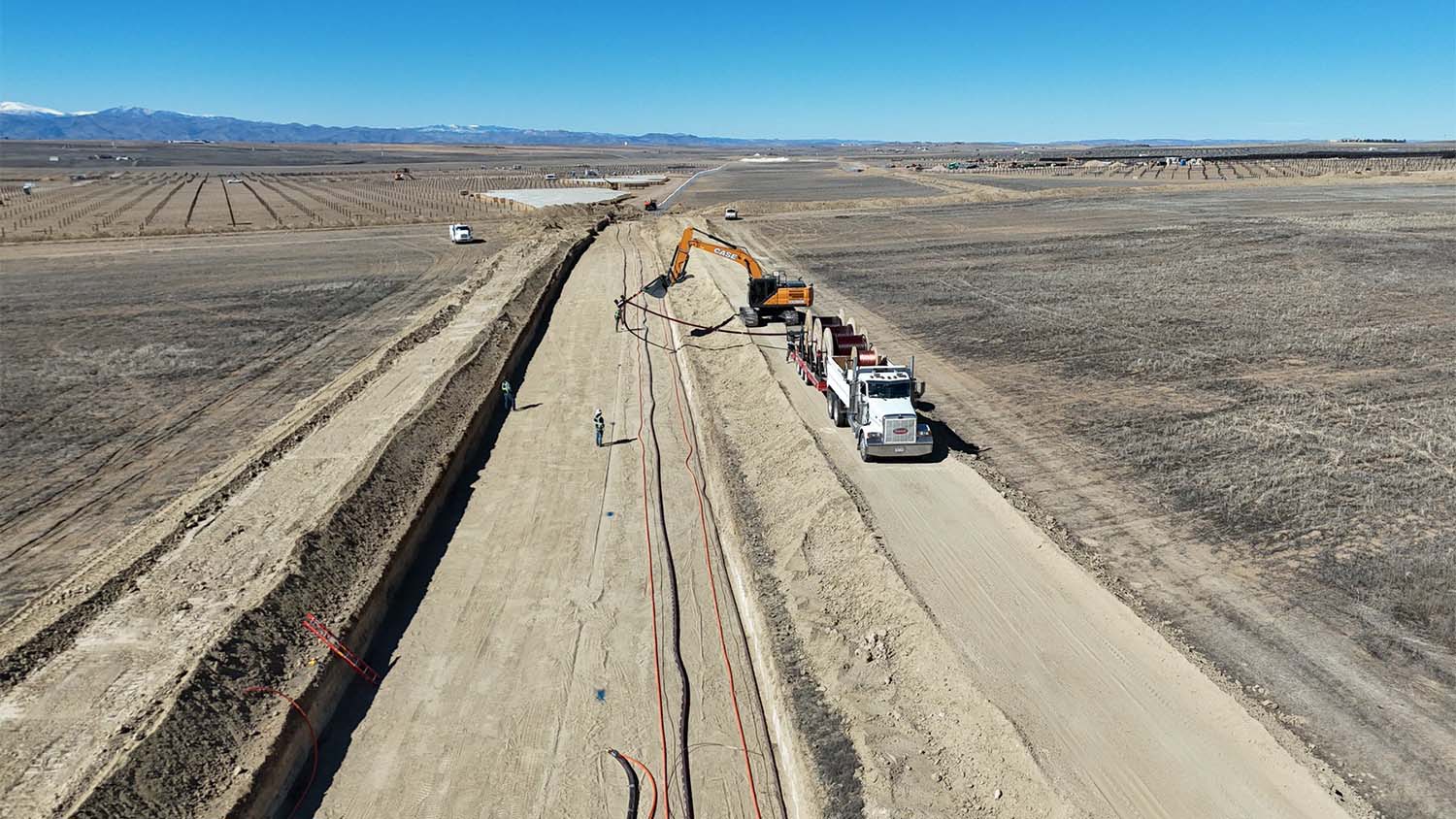
Trenching for Power and Communications
High-density data centers typically require significant duct banks and multiple conduits. Precision is critical:
- Trench grades must meet engineer requirements and avoid low points where water can collect
- Conduit spacing and configuration must match design specs
- Backfill and compaction must protect duct banks and minimize future movement
Poor trenching practices can lead to damaged conduit, water intrusion, or settlement that eventually affects cable performance and accessibility.
Vaults, Manholes, and Handholes
Major data center sites rely on strategically placed:
- Electrical vaults and manholes
- Fiber handholes and splice points
- Access points for inspection and future pulls
Each of these structures requires careful excavation, bedding, and backfill to:
- Maintain alignment
- Prevent settlement or cracking
- Ensure long-term, safe access for maintenance crews
Coordination With Other Site Systems
Utility corridors must coexist with:
- Stormwater piping and structures
- Sanitary and water lines
- Foundations and deep utilities
- Future expansion corridors
Without coordination, trench paths can conflict with foundations, retaining walls, or storm infrastructure, forcing redesign and delay. A contractor familiar with complex infrastructure projects can help sequence and route utilities to avoid these clashes.
Documentation and As-Built Accuracy
For a data center that may be expanded or upgraded multiple times over decades, accurate documentation of underground utilities is invaluable. A strong earthwork and utility team will:
- Track conduit counts and sizes in each duct bank
- Provide accurate depth and routing information
- Support generation of precise as-built drawings
This reduces risk in future construction phases and maintenance work—especially valuable on large Colorado campuses where multiple projects may overlap over time.
With experience in complex underground work for utility-scale solar and infrastructure projects, Black Mountain Excavation understands how to make the underground network of a data center as robust and future-proof as the building above it.